
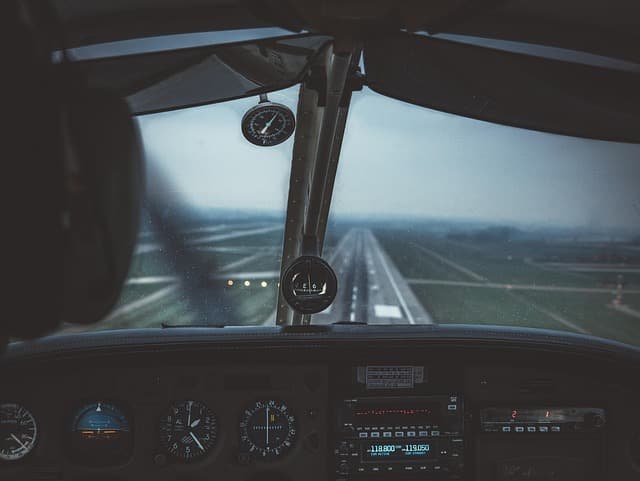
The Cockpit of Tomorrow is Here Today: Are You Ready?
For aspiring pilots, the dream has always been about mastering the aircraft and navigating the open skies. But as we move through 2025, the very definition of 'mastering the aircraft' is changing. While past discussions focused on new EASA regulations and the pilot shortage, a more profound, technology-driven transformation is now taking center stage. The co-pilot of the future might not always be human, and the sky is becoming a more crowded, data-rich environment. Recent industry news reveals three key trends that every student pilot must understand: the implementation of new digital tools in the airline flight deck, massive investment in autonomous flight technology, and the growing challenge of sharing the airspace with drones. These aren't far-off concepts; they are happening now and will define your career.
1. Wizz Air's New Tech: A Glimpse into the Modern Flight Deck
In a clear sign of how airlines are leveraging data to enhance operations, European carrier Wizz Air announced in early August 2025 the introduction of new flight deck technology aimed at improving passenger comfort. According to a report from AeroTime Hub, the system uses real-time data to optimize flight paths and reduce turbulence, leading to smoother journeys. While the passenger benefit is clear, the implications for pilots are significant. This represents a shift from reactive to predictive flying, where pilots are becoming managers of highly sophisticated, data-driven systems.
This development underscores a crucial point for today's students: proficiency in flying is no longer enough. You must also be a master of the technology that assists you. Aspiring pilots should expect that their future careers will involve:
- Advanced Systems Management: Understanding and interpreting complex data streams from various onboard systems to make informed decisions.
- Human-Machine Teaming: Working collaboratively with flight deck automation rather than just using it as a tool. This includes knowing its limitations and when to intervene.
- Digital Problem-Solving: Troubleshooting software and systems will become as important as managing mechanical issues.
Flight schools that integrate advanced glass cockpits and comprehensive training on flight management systems (FMS) are no longer just a luxury—they are a necessity for preparing pilots for the reality of airlines like Wizz Air.
2. The AI Revolution: Swiss Firm's Acquisition Signals a Future of Autonomous Flight
If Wizz Air's new tech is the present, a major business move in Switzerland points directly to the future. In early August 2025, hypersonic aircraft developer Destinus acquired Daedalean, a pioneering Swiss startup specializing in AI and autonomous flight controls, for a reported $223 million. As detailed by AeroTime Hub, Daedalean is a leader in developing EASA-certifiable software for single-pilot and fully autonomous flight.
This acquisition is a massive vote of confidence in the future of AI in the cockpit. While fully autonomous passenger jets are still on the horizon, the stepping stones—such as reduced crew operations and AI-powered co-pilot assistance—are being laid now. Daedalean's mission has been to build an “AI pilot” capable of passing a human pilot’s flight exam. For today's student pilots, this technological march towards automation means:
- Core Skills are Paramount: As automation handles more of the standard procedures, the pilot's role as the ultimate decision-maker and risk manager becomes even more critical. A deep understanding of aerodynamics, weather, and regulations is irreplaceable.
- Adaptability is Key: The pilot of 2035 will likely operate aircraft with systems that are vastly more sophisticated than today's. A mindset of continuous learning is essential.
- Job Market Evolution: While the pilot shortage is acute now, the long-term career path may change. Pilots who understand and can work with these emerging technologies will be in the highest demand.
Choosing a training organization that emphasizes Competency-Based Training and Assessment (CBTA) is vital. This EASA-supported approach focuses on developing core competencies like problem-solving and decision-making, which are precisely the skills needed to safely manage a highly automated cockpit.
3. The Crowded Sky: New Research Highlights the Urgent Drone Safety Challenge
The rise of automation isn't just happening inside the cockpit; it's happening outside as well. The proliferation of unmanned aerial systems (UAS), or drones, presents one of the most immediate challenges to aviation safety. Recent research from Embry-Riddle Aeronautical University, reported by General Aviation News on August 10, 2025, analyzed nationwide drone activity and identified 'hot spots' where the risk of a mid-air collision is highest—often near airports and in the low-level airspace where flight training occurs.
This creates a complex new reality for pilots. While EASA and other regulators are developing U-space regulations to manage drone traffic, the ultimate responsibility for see-and-avoid remains with the pilot. For students, this means:
- Heightened Situational Awareness: Learning to fly now requires a 360-degree awareness that includes the threat of small, hard-to-see drones.
- Understanding New Technology: Pilots will need to become familiar with drone detection systems and new air traffic control procedures as they are implemented.
- Risk Management at Low Altitudes: The circuit and local training areas are no longer exclusive to training aircraft. Every takeoff and landing requires a new level of vigilance.
How NewHangar Helps You Prepare for the Digital Cockpit
Navigating this complex and rapidly evolving technological landscape can be daunting. NewHangar is designed to give you the clarity needed to find a training path that prepares you for the future of aviation, not the past.
- Filter for Modern Fleets: Use our comprehensive search tools to find flight schools equipped with modern glass-cockpit aircraft (like the Garmin G1000), giving you hands-on experience with the integrated systems you'll encounter in your career.
- Find CBTA-Focused Schools: Look for schools that highlight a modern, EASA-aligned Competency-Based Training and Assessment (CBTA) philosophy in their profiles, ensuring you develop the critical thinking and problem-solving skills the industry demands.
- Connect with Forward-Thinking ATOs: Our platform helps you connect with Approved Training Organisations (ATOs) that are investing in the tools and teaching methods needed to produce pilots ready for a data-driven, automated, and crowded airspace.
Your Future Starts Now
The journey to an EASA pilot license is more than just logging hours; it's about acquiring a sophisticated set of skills to safely and effectively manage the technology of tomorrow. The developments at Wizz Air, the investment in Daedalean, and the growing drone challenge are not isolated news items—they are chapters in the story of aviation's digital transformation. By choosing the right training environment and embracing a mindset of adaptability, you can ensure you are not just a pilot, but a leader in the next generation of aviation.
Ready to find a flight school that will prepare you for the future?Start your search on NewHangar.com and take control of your career path today!