
Wind is one of the most variable factors in aviation, and the ability to handle crosswinds separates competent pilots from those still developing their skills. But before you can demonstrate crosswind technique, you need to know exactly what you are dealing with.
Understanding Wind Components
When the wind is not blowing straight down the runway, it has two components:
Headwind/Tailwind Component
The portion of the wind that blows along the runway centerline. Headwinds reduce ground speed and shorten takeoff/landing distances. Tailwinds do the opposite and should generally be avoided.
Crosswind Component
The portion of the wind that blows across the runway. This is what requires crosswind technique during takeoff and landing, and every aircraft has a maximum demonstrated crosswind component.
Why This Matters
Every aircraft has limitations. Your aircraft POH specifies a maximum demonstrated crosswind component, the strongest crosswind in which the aircraft was tested during certification. While not a hard limit, exceeding this value significantly increases risk.
For student pilots and those building experience, personal minimums should be well below the demonstrated maximum.
How Our Calculator Works
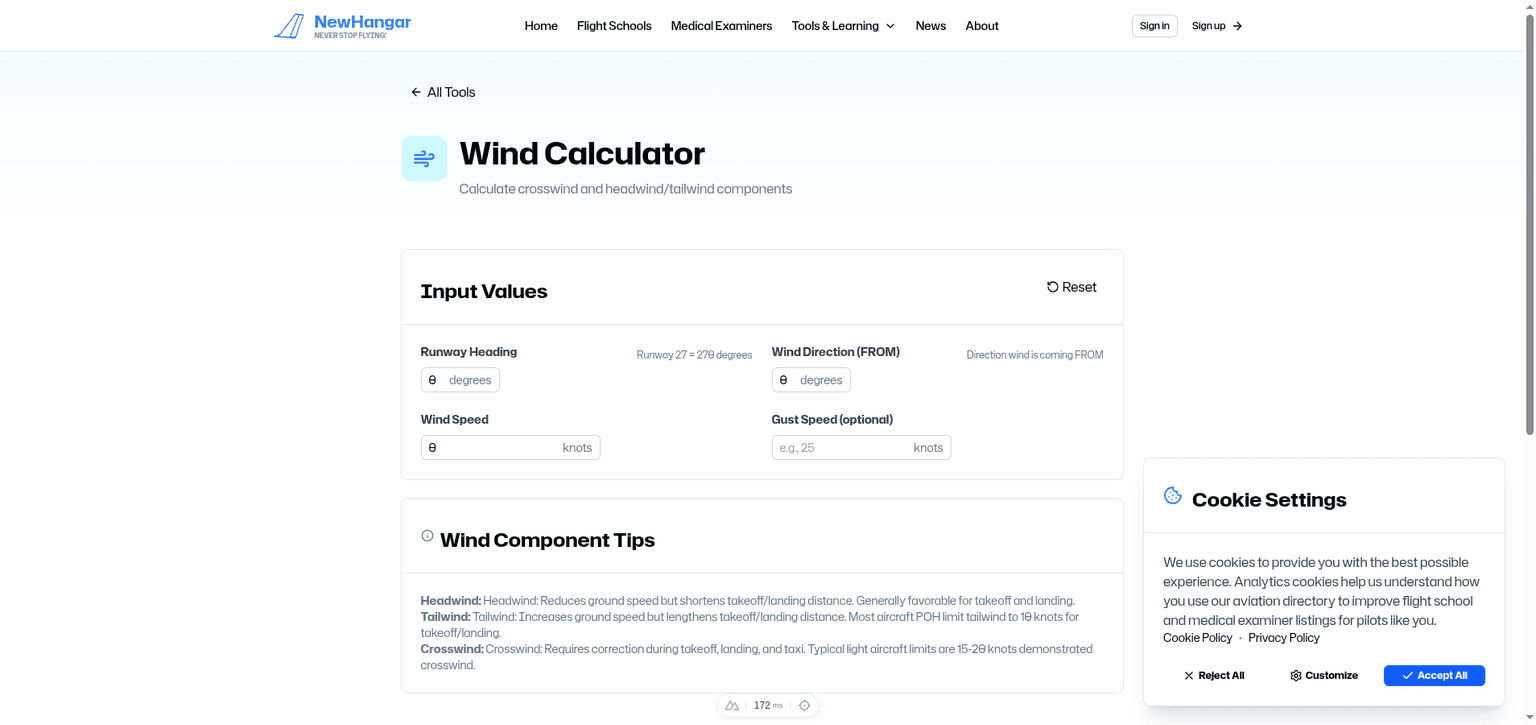
Simply enter:
- Runway heading - The magnetic direction of the runway you will use
- Wind direction - From the METAR or ATIS
- Wind speed - In knots
The calculator instantly shows:
- Crosswind component in knots
- Headwind or tailwind component in knots
- Wind angle relative to the runway
Making Go/No-Go Decisions
With accurate crosswind information, you can:
- Compare the crosswind to your personal minimums
- Choose the best runway if multiple options exist
- Decide whether to wait for conditions to improve
- Brief the appropriate crosswind technique
Building Crosswind Skills
The only way to become proficient at crosswind operations is practice. Start with light crosswinds and gradually increase as your skills develop.